
How Craft Wine Is Made in Boston: From California Grapes to the Bottle in Boston

People often ask us what makes a wine a craft wine. For us, the answer isn't one particular grape, barrel, or technique. It's the amount of attention and lack of additives that goes into every step of the process. From selecting our grapes to hand sorting every 36-pound basket, managing fermentation twice a day, tasting wines directly from the barrel, and aging the finished bottles for years before release, our approach to winemaking is intentionally hands-on. Here's a look behind the scenes at how we make our red wines.
It Starts With the Grapes
Great wine starts long before a bottle is opened—or even before fermentation begins.
We source our grapes from California, carefully selecting fruit that has reached the balance we're looking for. Two of the measurements we pay particular attention to are sugar and pH.
Sugar gives us an indication of ripeness and the potential alcohol that will develop during fermentation, while pH helps us understand the grape's acidity and overall balance.
But numbers are only part of the story. Once the grapes arrive at the winery, the hands-on work begins. Our grapes come in 36-pound baskets, and we hand sort and clean every basket. This gives us another opportunity to inspect the fruit before it makes its way into the wine. It's a time-consuming process, but that's part of craft winemaking: paying attention to the small things before they have an opportunity to become big things.
Crushing and Destemming
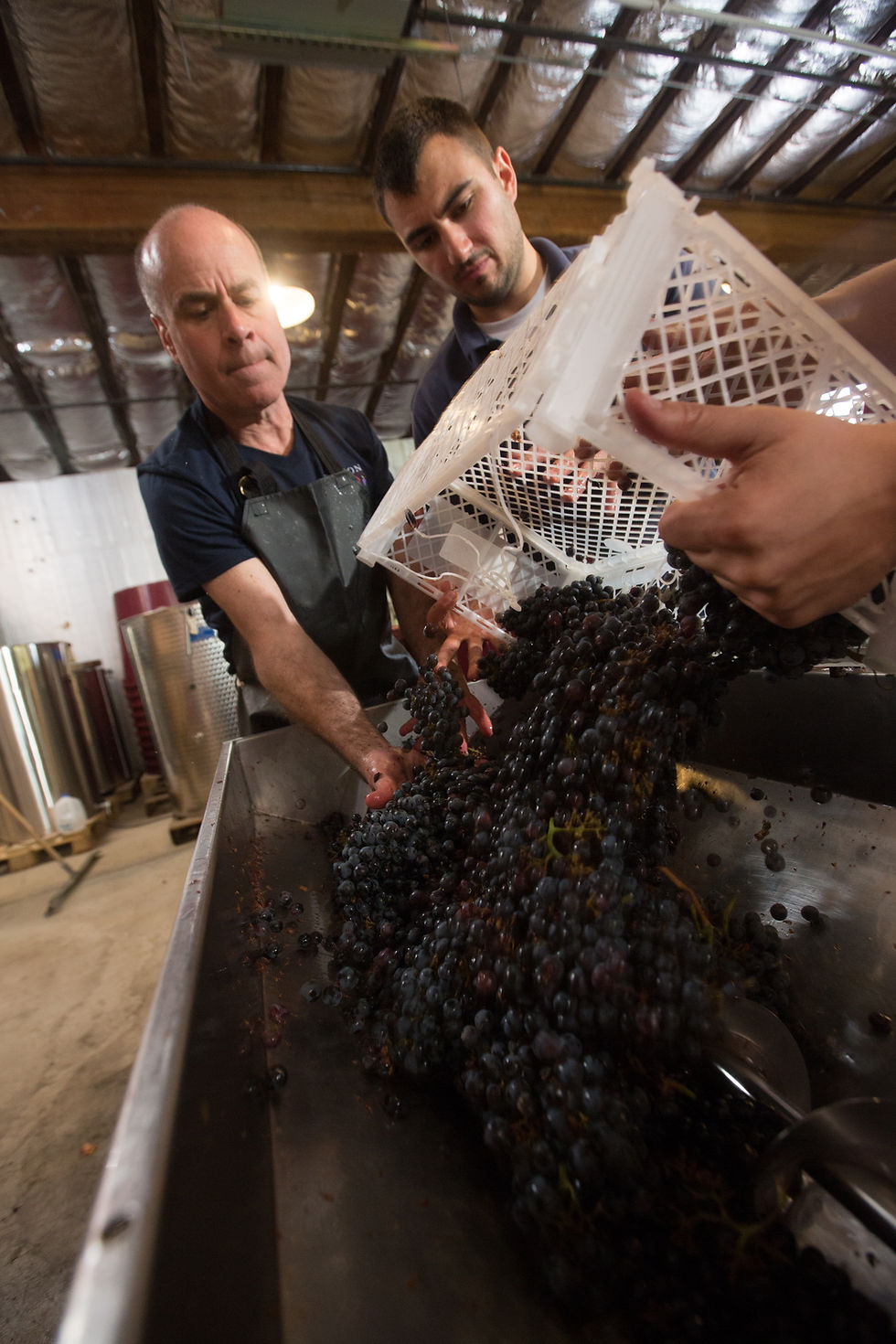
Once we've sorted the grapes, our red grapes are crushed and destemmed.
Destemming separates the grapes from their stems, while crushing breaks the skins and releases the juice. What we're left with is called the must—a combination of juice, skins, seeds, and grape solids that will eventually become wine. For red wine, those skins are particularly important. They contribute much of the wine's color, tannin, structure, aroma, sugar (eventually alcohol) and flavor. We allow the freshly crushed grapes to rest before moving on to fermentation, and we made add a non saccharomyces yeast here. Approximately 24 hours after crushing, we inoculate the must with saccharomyces yeast and fermentation begins.
Fermentation and Cap Management

This is where the grape juice and pulp starts its transformation into wine. The yeast consumes the natural sugars in the grapes and converts them into alcohol. As fermentation progresses, carbon dioxide pushes grape skins and other solids toward the top of the fermentation vessel, forming what winemakers call the cap.That cap needs attention.
We punch down our caps twice a day throughout fermentation. Punching down brings the
skins back into contact with the fermenting juice. This cap management helps us extract the color, tannins, aromas, and flavors we're looking for while allowing us to closely monitor each fermentation. It's another part of the process that can't simply be put on autopilot. We're working with the wine every day, watching, smelling, tasting, and seeing how it develops.
Knowing When It's Time to Press
As fermentation continues, we monitor the amount of sugar remaining in the wine using a measurement called Brix. We allow our red wines to ferment until they reach approximately 0° Brix, indicating that the fermentable sugar has essentially been consumed.
Then it's time to press. Pressing separates the young wine from the grape skins and remaining solids. The wine is then pumped into a tank and given time to settle.
After settling, we rack the wine and prepare it for one of the longest—and most important—parts of our process.
Racking is a process that takes advantage of gravity. Gravity draws the heavier solids to the bottom of the tank, we then pump the clean wine off, leaving the sediment at the bottom, this is racking.
Aging Our Wines in Oak Barrels
Our red wines are racked into oak barrels purchased from the oak cooperage.
Oak isn't simply a storage vessel. During barrel aging, the interaction between t
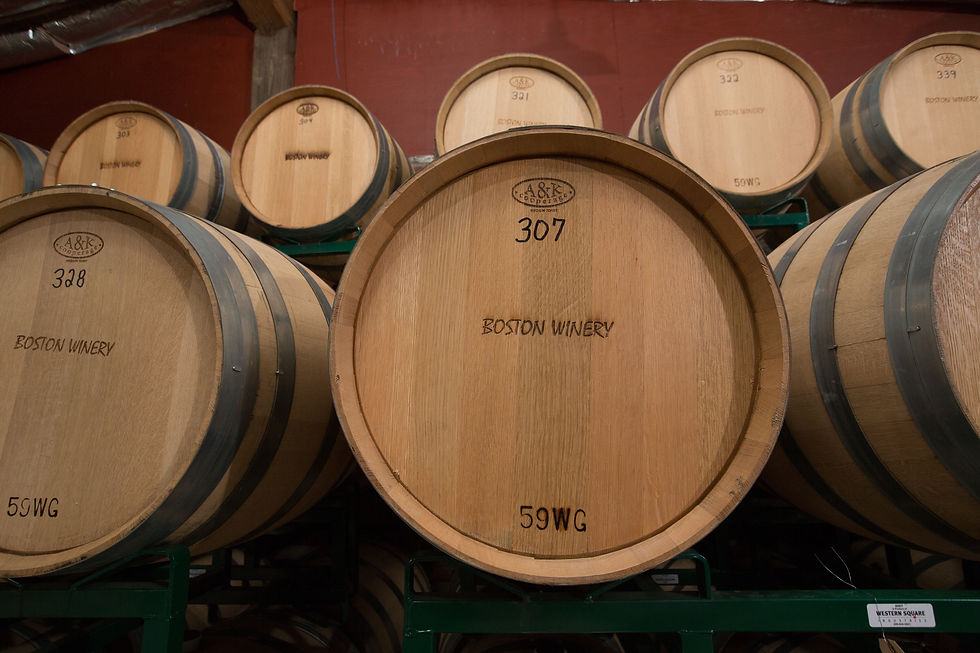
he wine, wood, and small amounts of oxygen can influence the wine's aromas, flavors, texture, tannins, and overall development. We use our barrels for three cycles. After that, we consider the barrels essentially inert, meaning they've given most of the oak character we're looking to extract from them. Our choice of barrels include, American, French and Hungarian, each oak offers it's own complexity and profile, we as the winemakers determine how we would like to pair those with our wines. While the wine is aging, our work continues.
We rack the wines several times during barrel aging, carefully transferring the wine away from the sediment that naturally accumulates over time.But there's one question that can't be answered by a calendar alone:
How do we know when the wine has spent enough time in the barrel?
We taste it.
The Most Important Tool We Have Is Our Palate

There are plenty of measurements, instruments, and techniques involved in making wine. But ultimately, wine has to be tasted. That's where my brother Ralph and I come in.
Throughout barrel aging, Ralph and I taste the wines together to evaluate how they're developing. We're looking at the wine as a whole—its fruit, tannins, oak influence, structure, balance, and how those components are coming together. We don't decide that a wine is finished with barrel aging simply because a predetermined number of months has passed.
The wine tells us when it's ready.
That philosophy is an important part of how we approach craft winemaking. Every vintage is different. Every lot develops differently. Our job isn't to force every wine onto exactly the same schedule. It's to pay attention to what's happening in the barrel and make decisions accordingly.
Craft winemaking is a balance between science and art. We as artist have the privilege of determining styles and aging.
From the Barrel to the Bottle
Once Ralph and I determine that the wine is ready to come out of barrel, we move into the final stages of production. The wine is filtered and bottled. For many wines, that might sound like the end of the process. For us, it isn't. We believe time in the bottle is another important part of a wine's development. After bottling, our red wines are allowed to age for at least one to five years, depending on the wine and how it develops. During this period, the components of the wine continue to integrate and mature. And once again, we taste.
Only when we believe the wine is ready do we prepare to share it with the public.
Craft Wine Takes Time
From a 36-pound basket of California grapes to a finished bottle, our process can span years. We hand sort the fruit. We crush and destem it. We manage fermentation twice every day. We press, settle, rack, barrel age, taste, rack again, taste again, filter, bottle, and wait.
There are faster ways to make wine. But speed isn't what we're after. For us, craft winemaking means staying involved with the wine from the moment the grapes arrive until the day we're ready to put the bottle in someone's hands. Some decisions are guided by measurements like sugar, pH, and Brix. Others are made through experience and taste. Both matter.
Perhaps that's the best way to describe how we make our wines:
Science helps guide the process. Our palates tell us when the wine is ready. And time takes care of the rest.
Winemaking for us is a passion, it's our art and our way to prove to the world that people are still willing to produce wholesome products through hard work, without shortcuts and without modern day flavorings, and colorings.
— Vito


Comments